


Itraab Music Ensemble Concert
June 11, 2021
Wednesday, April 29, 2026, 7:30 PM
Street and Davis Performance Hall, Anne and Ellen Fife Theatre
Free
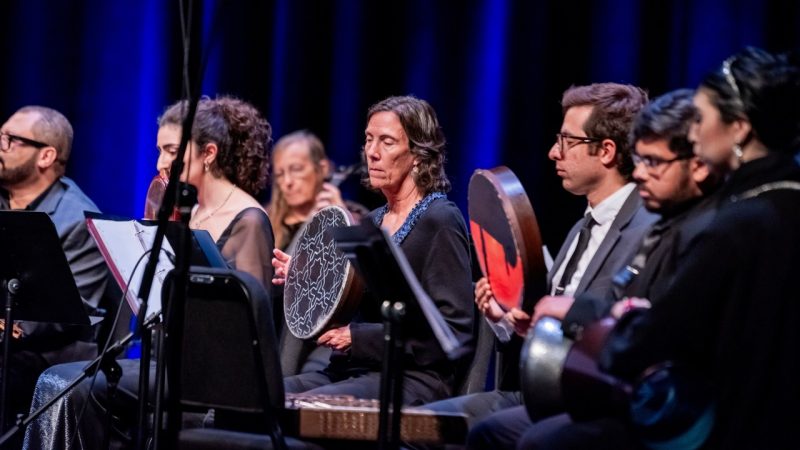
Enjoy the culminating spring concert by this beloved ensemble that bridges Virginia Tech and the broader community.
The Itraab Music Ensemble, whose name means “creating enchantment through music,” is a musical group made up of Virginia Tech students, graduate students, faculty, staff, and community members.
Under the direction of Anne Elise Thomas, ethnomusicologist, the ensemble performs traditional and contemporary repertoire from Southwest Asia and North and East Africa, as well as their diasporas. Instrumentation includes 'ud, qanun, santoor, tar, and other instruments.
The livestream of this concert will be available beginning at Wednesday, April 29, at 7:30 p.m.
Performance Program
Waslah (set of pieces) in Maqam Hijaz
Folk tune from Upper Egypt
Traditional; adapted from the playing of George Sawa
Samai Hijaz Bereket
Instrumental composition by Anne Elise Thomas (U.S., b. 1974)
Shetti ya Dunya (Rain, O World, in Abundance)
`An-Nadda Nadda (O Nadda, Nadda)
Two songs for dabke dance by Assi and Mansour Rahbani (Lebanon, 20th century)
Marsam (Art Room)
Original song by Montasir Abbas (Sudan and U.S., b. 1970)
Üsküdara
Traditional tune paired with various words and played throughout the Eastern Mediterranean (and beyond)
Yāre Dabastānie Man (My Grade School Chum)
Composed by Fereydoon Foroughi (Iran, 1951-2001)
Sarzamin-e Man (My Homeland)
Traditional melody with lyrics by Amir jan Saburi (Afghanistan), as performed by Dawood Sarkhosh (Afghanistan and Pakistan, b. 1971)
Mast Qalander
Sufi folk song from Pakistan
Bahar Bahar (It’s Spring)
Composed by Mohammed Heydari (Iran and U.S., 1937-2016), with lyrics by Ardalan Sarfaraz (Iran, lived in various countries; b. 1950)
Alf Layla wa Layla (One Thousand and One Nights)
Composed by Baligh Hamdi (Egypt, 1932-1993), with lyrics by Morsi Gameel Aziz (Egypt, 1921-1980)
Zouruni Kulli Sana Marra (Visit Me Once a Year)
Song by Sayyid Darwish (Egypt, 1892-1923)
All pieces adapted and arranged by Anne Elise Thomas and Itraab
Itraab Music Ensemble
Now in its 12th season, Itraab Music Ensemble was established in 2014 as a project of the Center for the Arts and has been continuously active since then. The group’s name translates as “the act of enchanting by music” and is a nod to the Tarab style of music that enjoyed a golden age in the early- to mid-20th century. Itraab is a multigenerational ensemble of students, faculty, staff, and community members who study and perform classical, traditional, and contemporary repertoire from South and Southwest Asia and North and East Africa, as well as their diasporas. This season the ensemble is honored to work with the center’s guest curator, Esraa Warda. In past seasons Itraab has worked with percussionist Ali Analouei, multi-instrumentalist Karim Nagi, hip-hop artist and activist Omar Offendum, Iranian-American fusion group Niyaz, violinist Sami Abu Shumays, and specialists of Arab-Andalusian traditional music Aïcha Redouane and Habib Yammine. In frequent performances on and off campus, Itraab aims to present its chosen musical styles in their cultural richness, satisfying seasoned audience members and acquainting new listeners with the sounds of musical enchantment. Itraab regularly performs for events hosted by the Arabic Club at Virginia Tech, the Iranian Students Association, YMCA at Virginia Tech, the International Street Fair, the Blacksburg Refugee Partnership, and other local schools and organizations.
Anne Elise Thomas
Anne Elise Thomas, director, is an ethnomusicologist and performer with specialties in Arab musical traditions, Irish music, and Appalachian music and dance. A native of Blacksburg, Thomas has directed Itraab at Virginia Tech since its founding in 2014. She began playing the qanun at the College of William and Mary in 1994 and spent several years studying Arabic music in Jordan and Egypt for her dissertation research. Her teachers include Alfred Gamil, Saber `abd al-Sattar, `Ala Saber, Emile Haddad, George Sawa, Jamal Sinno, and Anne Rasmussen. As a Ph.D. student, Thomas founded and directed the Brown Middle Eastern Music Ensemble at Brown University. She has performed at Symphony Space in New York City, Harvard University, the Library of Congress, and other locations throughout the mid-Atlantic region, as well as a variety of venues in Virginia with her all-woman professional ensemble al-Hawanim. Thomas is currently assistant professor of music at Sweet Briar College, where she teaches in the music program as well as women’s and gender studies.
To the Virginia Tech School of Performing Arts; the Arabic program in the Department of Modern and Classical Languages and Literatures; and to colleagues, friends, and ensemble members for help with scores and translations. We also thank graduate assistant Caili Harris for her invaluable support this season.
Itraab welcomes new members at the beginning of each semester, with rehearsals on Sundays, 3:00-5:00 p.m., during the academic year. Prior musical experience is a plus, but not required. Students can register for Itraab as a one-credit course through the School of Performing Arts. For more information, email itraab@vt.edu.
Text and Translations
Lyrics: Mansour Rahbani
Music: Assi Rahbani
Language: Arabic
Shati ya dinyeh teyzeed mawsimna yehla
W tedfo’ mayy w zar‘a jdeed b haqlitna ya‘la
Khalili ‘einak ‘al dar `‘asiyaj elli kello zrar (x2)
Bokra el-shtawiyye betrouh w mnetla’a b nwar
Yehla ‘eid yedwi ‘eid nizra‘ w nlem ‘ana’eed
W enterni la teb’a tefl w titrikni waHdi ‘am til (x2)
Jama‘at illak harj zhour yasmeen, mantour, w fil
Zahra b ‘eid, alb b ‘eid ya khawfi la’eek b‘eed
W enterni b hqoul el-reeh el-dnyeh ‘ana’eed talaweeh (x2)
W khabbeeni b feyyeh b ‘einayk jaraHni Hobbak tajreeh
Oul w zeed, ghanni w ‘eed nazra‘ hal ard mawa‘eed
شتي يا دنيي تيزيد موسمنا و يحلى
و تدفق مي و زرع جديد بحقلتنا يعلى
خليلي عينك عالدار عسياج اللي كلو زرار
بكره الشتويي بتروح و منتلاقى بنوار
يحلى عيد يضوي عيد نزرع و نلم عناقيد
و انطرني لا تبقى تفل و تتركني وحدي عم طل
جمعتلك حرج زهور ياسمين و منتور و فل
زهرة بأيد قلب بأيد يا خوفي لاقيك بعيد
و انطرني بحقول الريح الدنيي عناقيدا تلاويح
و خبيني بفية عينيك جرحني حبك تجريج
قول و زيد غني و عيد نزرع هالأرض مواعيد
Rain o world, in abundance
In order for our harvest to grow and sweeten
Pour forth water and plant anew
So that our fields may rise
Watch over the house and the fence covered in rosebuds
Tomorrow winter will be gone and we'll meet among the blossoms
Feasts come and go as we plant and gather grapes
Wait for me and don't go leaving me alone to look out
I gathered you a bouquet of flowers
Jasmine, Matthiola, and Arabian Jasmine
A flower in one hand and my heart in the other
My fear is that I find you are far away
And wait for me in the windy fields
The grapes are almost ripe
Hide me in the shade of your eyes
Your love wounded me
Tell me and tell me again
Sing and repeat
Let's plant promises in this land
Translation by Gabrielle Chahine, 2026
Lyrics: Mansour Rahbani
Music: Assi Rahbani
Language: Arabic
`An-Nadda, Nadda, Nadda
Wil-ward imfattah `a-khadda
Win ma `ityouni yaaki
Ya jibaal il-`ali la-hidda
Nadda kaanit had il-`ayn
W-isaalt-ha il-ghay-bi wayn
Ghamzitne bi-hak il-`aynayn
W-badda tahki w-ma badda
Nadda nizlit `al-bustan
W-’a-ha w-zhar nisan
`Am dhul m-labbak sahran
W-njum il-layl b`idda
Mbarih bil-hilwa tla`ait
Hayk w-midri shu hassait
W-lamma `azimtni `al-bayt
W-ma`ad ‘albi yithadda
Ya tayr illi bitdill t-tayr
T`amul bi-shams imshaweer
Sallimli `a-hilwi kteer
Kannak mara’a min hadda
عالندّا الندا الندا
والورد مفتح ع خدا
وان ماعطيوني اياكي
يا جبال العالي لَهِدّا
ندّا كانت حد العين
وسألتها الغيبه وين
غمزتني بهاك العينين
وبَدّا تحكي ومابَدّا
ندّا نزلت ع البستان
ولقاها وزهّر نيسان
عم ضل مْلبَّك سهران
ونجوم الليل بْعِدّا
مبارح بالحلو تلاقيت'
هيك ومدري شو حسيت
ولما عزمتني ع البيت
وماعد قلبي يتهدّا
يا طير اللي بتضل تطير
تعمل بالشمس مشاوير
سلملي ع الحلو كتير
كانك مارء من حَدّا
Nadda, Nadda, O Nadda
With roses blooming on her cheeks
If they don’t give you to me
I’ll tear down these high mountains
Nadda was by the spring
And I asked her where she’d been
She winked at me with her two eyes
And wanted to talk to me, but wouldn’t
Nadda went down to the orchard
Upon arriving, spring blossomed
She keeps me up all night, perplexed
Counting the night stars
Yesterday I met the beautiful one
And I can’t explain how I felt
When she invited me to her home
I couldn’t contain my heart
O bird that flies continuously
Making round trips around the sun
Greet the beautiful one for me
If you pass her by
Based on lyricstranslate.com
By Montasir Abbas
Language: Arabic
وَأَتَيْتُ لِأُحْضِرَ كَفَنًا
مِنْ دُرْجٍ تَحْتَ المَرْسَم
أَرْسِمُ أَحْلَامًا تَعْلُو
لَا تَلْبَثُ أَنْ تَتَحَطَّم
يَا رِيشَةَ عُودِ حَيَاتِي
مَا بَالُ فُؤَادِكِ أقْسم؟
أنْ يَعْزِفْ لَحْنَ مَمَاتِي
بِمَقَامِ السِّرِّ الأَعْظَم
مَا كَانَ خَيَالُكَ إِلَّا
سِحْرًا يَجْعَلُنِي أَحْلُم
وَكَلَامُكِ كَانَ بِقَلْبِي
دَقَّاتِ العِشْقِ الأَقْدَم
فَحَيَاتِي عُودٌ يَشْدُو
هَمْسًا مَا كَانَ تَكَلَّم
وَأَتَيْتِ كَرِيشَةِ نَسْرٍ
فَتُحَلِّقَ عُودًا مُلْهَم
I came to fetch a shroud
from a drawer beneath the studio.
I paint dreams that rise —
only to shatter before they last.
O feather of the oud of my life,
what troubles your heart — tell me?
That it should play the melody of my death
in the mode of the greatest secret.
Your image was nothing but
a magic that taught me to dream.
And your words within my heart
were the oldest pulses of love.
My life is an oud that sings,
in a whisper that never spoke.
And you came like an eagle’s feather,
lifting an inspired oud into flight.
Translated by Montasir Abbas, 2026
Folk song from Türkiye (also known as Kâtibin)
Language: Turkish
Üsküdar’a Gider İken Aldı Da Bir Yağmur,
Kâtibimin Setresi Uzun Eteği Çamur.
Kâtip Uykudan Uyanmış Gözleri Mahmur.
Kâtip Benim Ben Kâtibin El Ne Karışır,
Kâtibime Kolalı Da Gömlek Ne Güzel Yaraşır.
Üsküdar’a Gider İken Bir Mendil Buldum,
Mendilimin İçine Lokum Doldurdum.
Kâtibimi Arar İken Yanımda Buldum.
Kâtip Benim Ben Kâtibin El Ne Karışır,
Kâtibime Kolalı Da Gömlek Ne Güzel Yaraşır.
While going to Üsküdar, rain started,
My scribe’s coat is long, his skirt is muddy.
The scribe has woken up from sleep, his eyes are cloudy.
The scribe is mine, I am his and strangers can’t interfere,
A starched shirt looks nice on the scribe.
While going to Üsküdar, I found a handkerchief,
I put lokum (Turkish delight) into my handkerchief.
While I search for my scribe, I found him at my side.
The scribe is mine, I am his and strangers can’t interfere,
A starched shirt looks nice on the scribe.
A student protest song from Iran
By Fereidoon Foroughi
Language: Farsi
Yāre dabestānie man, bā man o hamrāhe mani
Chube alef bar sare mā, boghze man o āhe mani
Hak shode esme man o to, ru tane in takhte siāh
Tarke-ye bidād o setam, munde hanuz ru tane mā
Dashte bi-farhangie mā, harze tamume alafāsh
Khub age khub, bad age bad, morde delāye ādamāsh
Daste mano to bāyad in, parde-hā ro pāre kone
Ki mitune joz man o to, darde mā ro chāre kone?
یار دبستانی من
با من و همراه منی
چوب الف بر سر ما
بغض من و آه منی
حک شده اسم من و تو
رو تن این تخته سیاه
ترکهٔ بیدادو ستم
مونده هنوز رو تن ما
دشت بی فرهنگی ما
هرزه تمومه علفاش
خوب، اگه خوب
بد، اگه بد
مُرده دلای آدماش
دست من و تو باید این
پرده ها رو پاره کنه
کی میتونه جز من و تو
درد ما رو چاره کنه
یار دبستانی من... ا
My school mate, you are with me and accompany me
When the cane hits us on the head, you are my sob and my sigh
My name and yours are engraved on this blackboard
The lash of injustice and oppression has left marks on our bodies
The field of our culture has grown wild with neglect
Be it good or bad, the hearts of its people are dead
My hands and your hands have to tear down these curtains
Who other than you and me will find the cure to our ills?
Translation based on versions at lyricstranslate.com
Lyrics: Amir jan Saburi
Music: Traditional
Recorded by Dawood Sarkhosh
Language: Dari
Be ashyana gashtam
Khana ba khana gashtam
Be tu hamesha ba gham
Shana ba shana gashtam
Ishqe yagana-e man
Az tu neshana-e man
Be tu namak nadarad
Sheher o tarana-e man
Sarzamin-e man...
Khasta khasta as jafaye
Be sorood o be sadaye
Dardmand be dawaye
Sarzamin-e man...
Ki ghame tu ra soroda?
Ki rahe tura goshoda?
Ki ba tu wafa namoda?
Mah o setara-e man
Rahe dubara-e man
Dar hama jaa namesha
Be tu gozara-e man
Ganj tura rabodand
Az bahre ashrat khod
Qalbe tura shekasta
Har ke ba nobat-e khod
Sarzamin-e man...
Mesle chashem in setara
Mesle dasht por ghobara
Mesle qalb daghdara
Sarzamin-e man...
بیآشیانه گشتهم خانهبهخانه گشتهم
بی تو همیشه با غم شانهبهشانه گشتهم
عشق یگانهی من، از تو نشانهی من
بیتو نمک ندارد شعر و ترانهی من
سرزمین من خسته خسته از جفایی
سرزمین من بیسرود و بیصدایی
سرزمین من دردمند بیدوایی
سرزمین من
سرزمین من کی غم تو را سروده؟
سرزمین من کی ره تو را گشوده؟
سرزمین من کی به تو وفا نموده؟
سرزمین من
ماه و ستارهی من، راه دوبارهی من
در همه جا نمیشه بی تو گزارهی من
گنج تو را ربودند از بهر عشرت خود
قلب تو را شکسته هر که به نوبت خود
سرزمین من خسته خسته از جفایی
سرزمین من بیسرود و بیصدایی
سرزمین من دردمند بیدوایی
سرزمین من
سرزمین من مثل چشمِ انتظاری
سرزمین من مثل دشت پرغباری
سرزمین من مثل قلبِ داغداری
سرزمین من
I’ve become homeless
I’ve searched door to door
Without you, always with sorrow
Pace by pace I’ve searched
My only love, my existence
Without you, there is no beauty in my poem and song
My homeland...
Weary from persecution
With no hymn or song
In pain and hopeless
My homeland...
Who has sung your song?
Who cleared the way for you?
Who has been loyal to you?
My moon and my star, my second chance
I can’t live anywhere but with you
They stole your treasure to enrich themselves
Your heart is broken by each person in turn
My homeland...
It seems you are waiting
Like a desert full of dust
Like a grieved heart
My homeland
Translation based on versions at lyricstranslate.com and musixmatch.com
Sufi folk song from Pakistan
Lyrics were likely originally written by Amir Khusrow (13th century) and honor the Sufi saint of Sindh, Shahbaz Qalandar, who is known to have united the region in the 12th century
Languages: Punjabi and Sindhi
O laal meri patt
Rakhio bala jhoole laalan
Sindri da, Sehwan da,
Shabaaz Qalandar
Dama dam mast Qalandar
Ali dam dam de aandar
Dama dam mast Qalandar
Sakhi Shahbaz Qalandar
O laal meri
Char charagh teray balan hamesha
Panjvan balan ayo, bala jhoolay lalan
Hind Sind peera teri naubat baaje
Naal vaje ghadiyaal bala jhoole laalan
Peeran ve tera peer, sab da wali ae
Ho laqab assadullah hai, naam Ali ae
O naam e Ali beda, paar laga jhule lalan
Oh red-robed, keep my honor safe, Jhoole lal
Oh master and friend of Sindh and Sehwan:
Shahbaz Qalandar
Forever intoxicated, in every breath, the ecstatic Qalandar
Four lamps forever illuminate your shrine
The fifth has come to bless, Jhoole lal
In the whole of combined India and Sindh, your glory resounds
Along with the drums, Jhoole lal
Dear master, your own lord is everyone’s protector
His name is Ali
With the name of Ali, the pain is relieved, Jhoole lal
Translated by Sana Illahe, 2026
Lyrics: Ardalan Sarfaraz
Music: Mohammad Heydari
Sung by Hayedeh
Language: Farsi
Bahar bahar baz oomade dobare
Baz tamoom delhi che bigharare
Ama baraye man door az khoone
Bahara ham mesle khazoon mimoone
Bahar khoone booye dige dare
Havaye khoone hamishe bahare
Ama baraye man door az khoone
Bahara ham mesle khazoon mimoone
Khoone hezar hezar ta yad o yadgari dare
Bachegi o gholak o eydi be yadam mi’are
Goldoon-e yas razaghi banafsha-haye baghche
Ayene o shamdoun-e jahaz-e madaro to taghche
بهار بهار باز اومده دوباره
از تموم دلها چه بی قراره
اما برای من دور ز خونه
بهارا هم مثل خزون میمونه
بهارا هم مثل خزون میمونه
بهار خونه بوی دیگه داره
هوای خونه همیشه بهاره
اما برای من دور ز خونه
بهارا هم مثل خزون میمونه
بهارا هم مثل خزون میمونه
خونه هزار هزار تا یاد و یادگاری داره
بچگی و قلک و عیدی به یادم میآره
گلدون یاس رازقی بنفشههای باغچه
آینه و شمعدون جهاز مادرو تو طاقچه
It’s spring again, all hearts are excited
But being far from home
Spring is like Autumn for me
Spring at home has its own aroma,
Home is always Spring
But being far from home
Spring is like Autumn for me
Home has a thousand memories,
Reminds me of childhood and holiday gifts
Jasmine vase and violet in the garden
Mirror and candlestick from Mom’s dowry on the niche
Translation based on versions at lyricstranslate.com
Lyrics: Morsi Gamil Aziz
Music: Baligh Hamdi
Sung by Umm Kulthum
Language: Arabic
Ya habibi, ya habibi
Il-laylu wi samah, wi-ngumuh wi-’amaruh
‘Amaruh wi saharuh
W-inta w-ana
Ya habibi ana
Ya hayati ana
Kullina, kullina fi-l-hubbi sawa
Wi-l-hawa, ahu minnuh l-hawa
Sahran il-hawa
Yis’ina il-hanna
Wi-y’ul bi-l-hanna
Ya habibi
Y-allah na`ish fi `uyun il-layl
Wi-n-’ul li-sh-shams ta`ali ta`ali ba`di sana
Mish ‘abli sana ah ta`ali
La-sh-shamsi ta`ali ah
Di laylit hubbi hilwa
Bi-alfi layla wa layla
Alfi layla wa layla
Bi-kulli l-`umr huwwa il-`umri eh
Ghayr layla zayyi l-layla
یا حبیبي ... اللیل وسماه ونجومه وقمره، قمره وسھره وإنت وأنا یا حبیبي أنا یا حیاتي أنا
كلنا، كلنا في الحب سوا والھوى آه منه الھوى سھران الھوى یسقینا الھنا ویقول بالھنا
یا حبیبي یلا نعیش في عیون اللي
ونقول للشمس تعالي، تعالي
بعد سنة، مش قبل سنة
دي لیلة حب حلوة
بألف لیلة ولیلة
بكل العمر ھو العمر إیھ غیر لیلة زي اللیلة
O my beloved
The night and its sky, its stars and its moon
Its moon and keeping awake all night
You and me
O my beloved
O my life
All of us together are the same in love
Love, aah, from love
Staying awake at night, love gives us a drink of happiness and speaks of happiness
O my beloved,
Let us live in the eyes of the night
And tell the sun, “Come, come after a year, not before a year!”
This night of love is sweet,
[sweet] as a thousand and one nights,
A thousand and one nights.
All of life — what is life, if not a night like this night?
Translated by Anne Elise Thomas, 2026
Lyrics: Yunus al-Qadi
Music: Sayyid Darwish
Language: Arabic
Zouruni kulli sana marra
Haram tinsuni b-il-marra
Zouruni kulli sana marra
Haram tinsuni b-il-marra
Haram tinsuni b-il-marra
Ya kho-fi w-il-hawa nadhra
Ti-jee w-trohi b-il-marra
Habibi furi’tak murra
Haram tinsuni b-il-marra
Haram tinsuni b-il-marra
Ya kho-fi `a-lli nasaakum
Wi-nasaakum wi-’asaakum
Ana `omri ma bnasaakum
Haram tinsuni b-il-marra
Haram tinsuni b-il-marra
زوروني كل سنة مرة
حرام تنسوني بالمرة
زوروني كل سنة مرة
حرام تنسوني بالمرة
حرام تنسوني بالمرة
يا خوفي والهوى نظرة
تجي وتروح بالمرة
حبيبي فرقتك مُرة
حرام تنسوني بالمرة
حرام تنسوني بالمرة
يا خوفي ع اللي نساكم
ونساكم وقساكم
انا عمري ما بنساكم
حرام تنسوني بالمرة
حرام تنسوني بالمرة
Visit me once a year
Don’t forget me completely
Visit me once a year
Don’t forget me completely
Don’t forget me completely
How I fear love is a glance
That you come and go at once
My love, your absence is bitter
Don’t forget me completely
Don’t forget me completely
How I fear the one who made you forget
Made you forget, and made you stoic
Never in my life will I forget you
Don’t forget me completely
Don’t forget me completely
Translated by Anne Elise Thomas, 2026